
IR FAST MEDIUM WAVE QUARTZ EMITTER
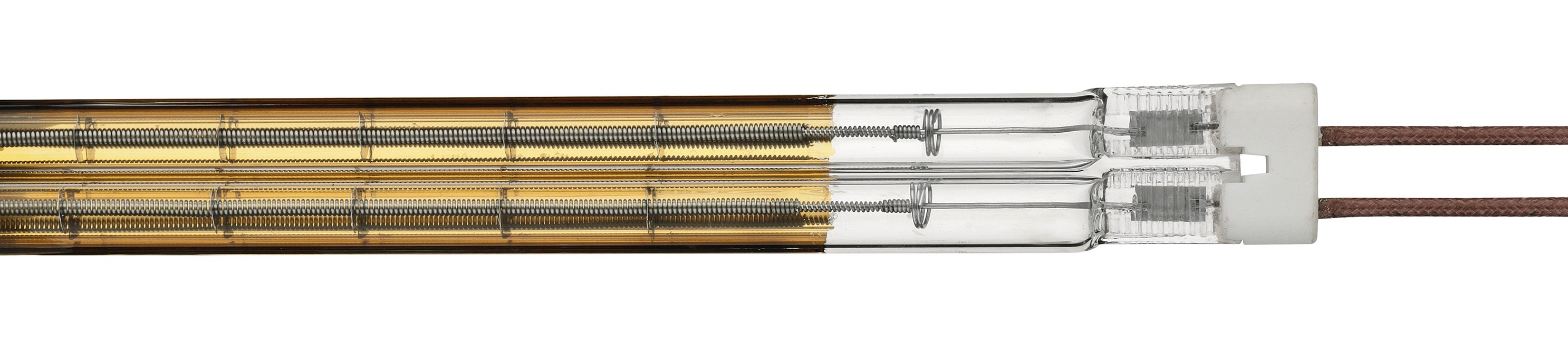
The fast medium wave emitter is the middle option. It is built for processes that need the radiation of a medium wave emitter together with the quick on/off response usually associated with short wave emitters.
At a glance
- Radiation peak: 1.4-1.6 µm
- Maximum nominal power density: 50 W/cm
- Maximum surface power density: 130 kW/m²
- Faster switching than standard medium wave
- Working position: horizontal (vertical on request)
How it works
As with the other families, Helios matches the peak radiation wavelength to the material’s absorption curve for an efficient, lower-energy process. A reflector can be applied directly to the quartz tube to convey and focus the emitted energy onto the material.
Technical specifications
| Parameter | Value |
|---|---|
| Twin tube standard sections |
18 x 8 mm, 23 x 11 mm, 34 x 15 mm |
| Radiation peak |
1.4-1.6 µm |
| Max nominal power density |
50 W/cm |
| Max surface power density |
130 kW/m² |
| Working position |
Horizontal (special vertical designs on request) |
| Reflector options |
Gold, White, Ruby |
Maximum power figures are nominal and confirmed at the prototyping stage.
Tubes, filaments and reflectors
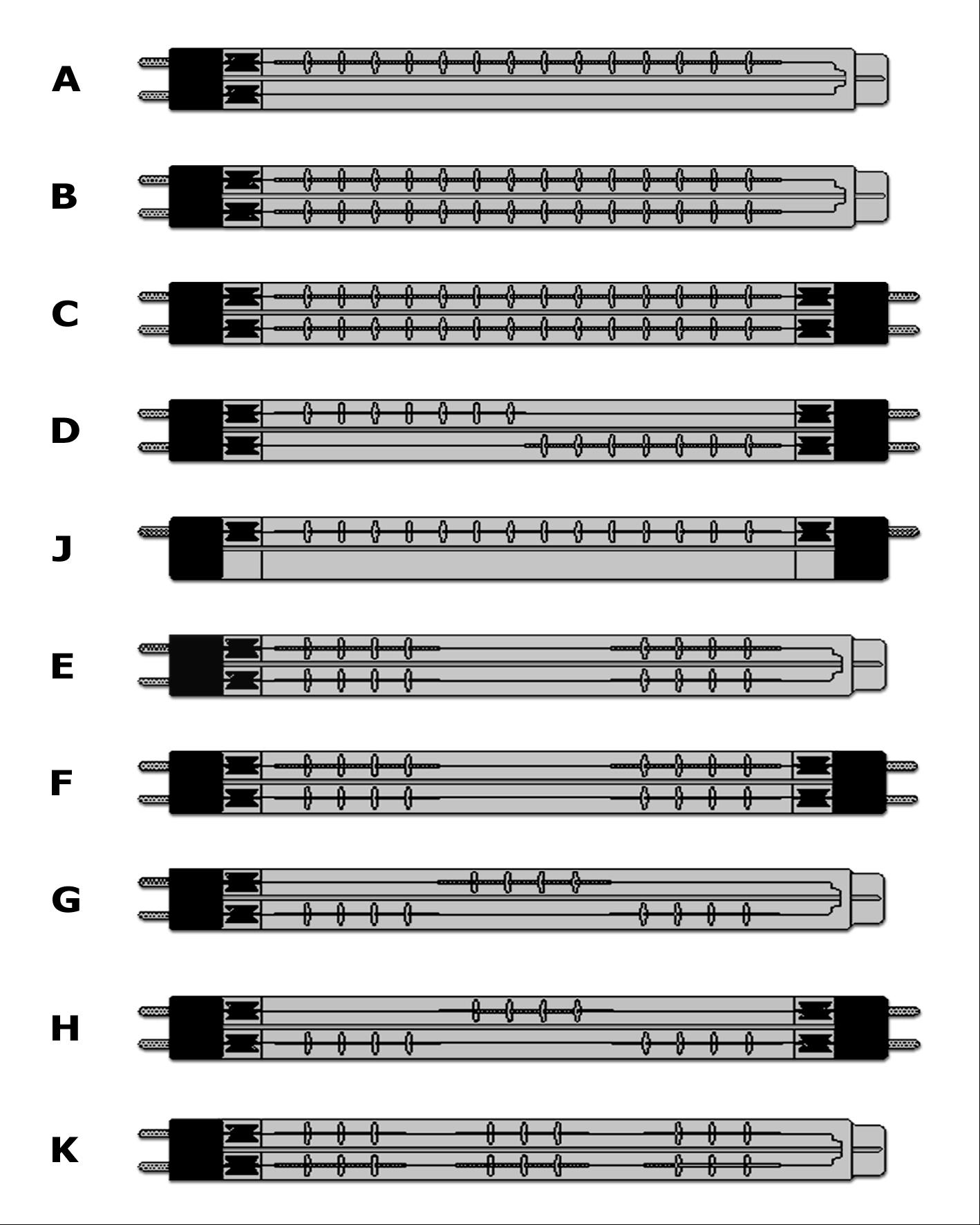
Twin tube emitters can be made with different filament configurations for flexibility in heated area and lead-wire position.
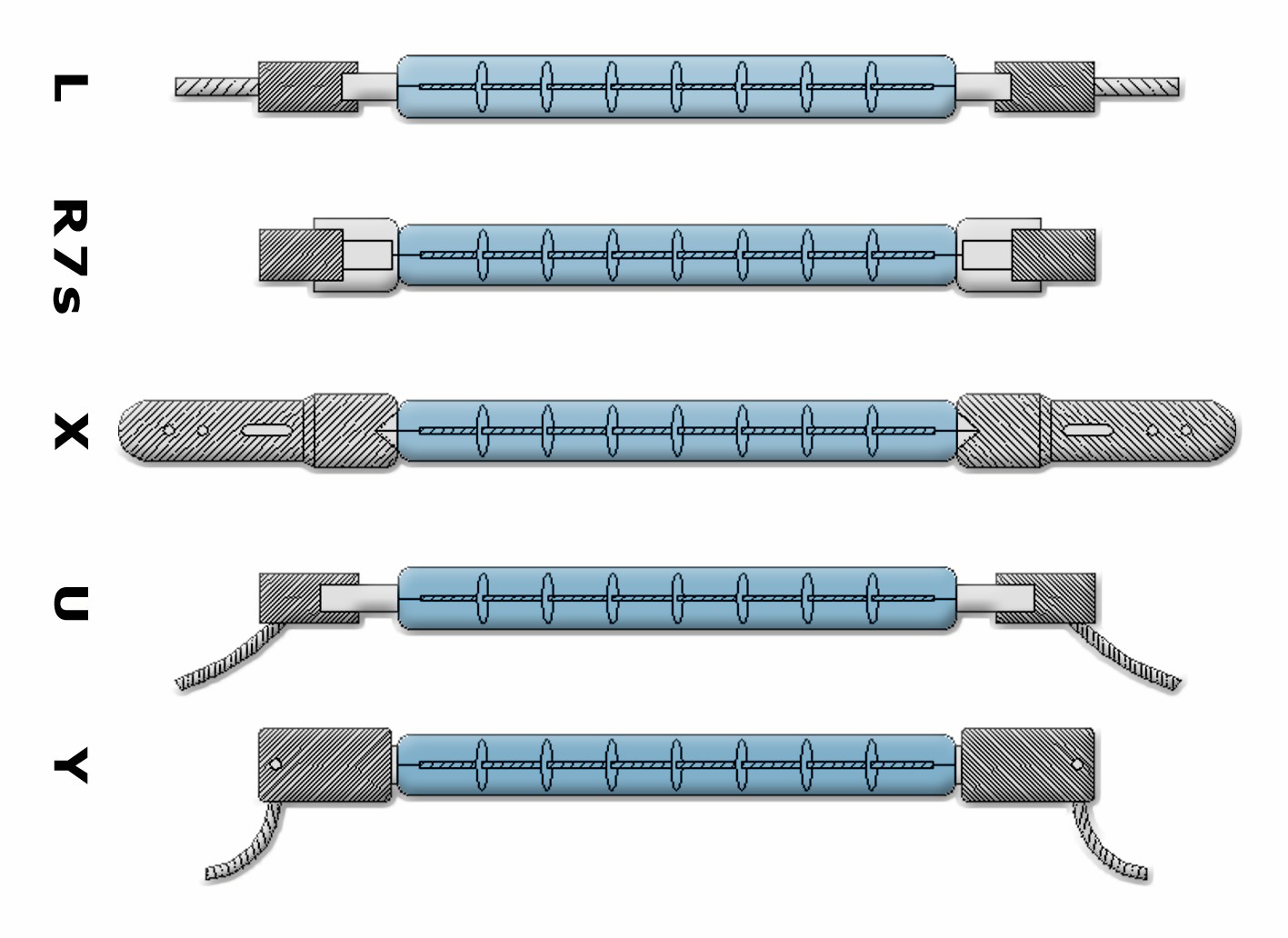
Single tube fast medium wave emitters are available in the following configurations:
Applications
Fast medium wave fits processes that need quicker cycling than medium wave but more measured heat than short wave: a practical compromise for many drying, curing and forming lines where the material sits between those absorption profiles.
FAQ
How is fast medium wave different from medium wave?
It peaks at a shorter wavelength (1.4-1.6 µm versus 2.2-3.2 µm) and switches on and off faster, while keeping much of the behaviour of a medium wave emitter.
Single tube or twin tube?
Both are available. Twin tube offers the highest mechanical strength and lengths up to 6.5 metres; single tube fast medium wave emitters are also produced.
Can I add a reflector?
Yes. Gold, white or ruby reflectors are applied directly to the tube.
Can it be designed for vertical operation?
The standard working position is horizontal, with special vertical designs available on request.
Send your material and process details to the technical department for a matched emitter design.